Lax has worked with Ellis since her youngest child was born; now her children are ages 8 and 6. Some vacations include only the immediate family, while others bring together relatives from both sides.
“[Ellis] understands the types of hotels we enjoyed, and the ones we didn’t like as much,” says Lax. “Now she can say, ‘I really think you would like this place.’ We’ve taken trips to destinations we wouldn’t have even thought about.”
Family vacations like Lax’s rarely come together effortlessly. The magical moments may be what families remember, but creating them can involve airfare alerts, spreadsheets, dozens of open browser tabs and competing ideas about what makes a great trip and what will work for everyone.
With guidebooks, reviews, social media, travel forums, blogs and AI-generated itineraries all offering possibilities, families are not short on options. The harder task is figuring out which trips will work in real life and which are worthy of a family’s limited vacation time.
A resort may be beautiful but a two-hour drive from the airport. A popular excursion may begin long before sunrise. A room that looks spacious online may not comfortably sleep a family of five. Those details matter when someone is hungry, uncomfortable or exhausted, but they’re not always readily apparent to a nonprofessional.
When a travel advisor meets with a client, they begin with questions and listen closely. Ellis recalls one pair of clients, grandparents who were planning a multigenerational trip. The initial conversations revealed important clues about their grandchildren. “They would tell me things like ‘this grandkid gets carsick’ or ‘this grandkid is a super picky eater,” she says. “It’s important to talk about all those layers involved with a trip.”
Provident Travel advisor Janet McLaughlin makes it a practice to ask what matters most to each traveler. “That way, I can take one or two things from each person’s wish list and make that happen so everybody’s happy,” she said. The goal is to make sure everyone feels considered and to create a trip that suits the family as a whole.
Knowing When to Change Course
Sometimes a family may already have a destination in mind, but an advisor may recognize that it is not quite the right match. When Lax, who had previously visited Joshua Tree and Palm Springs, considered returning with her children, she looked to Ellis. “She did some research for us, and given the ages of the kids, she felt like there was a better location for us,” Lax recalls. The new location turned out to be Tucson, Arizona, where a mix of on-site family activities, a kids’ club and nearby hiking offered a better fit for her extended family, including four children ages 4 to 12.
An advisor also considers details travelers may not think about: Is the hotel truly family-friendly or does it simply have a pool? Will three hotels in one week be too much for the group? Does the family prefer to have a full day of activities or plenty of unstructured time to relax?
One surefire way to make a multigenerational vacation miserable is to go in with the expectation that everyone will do everything together.
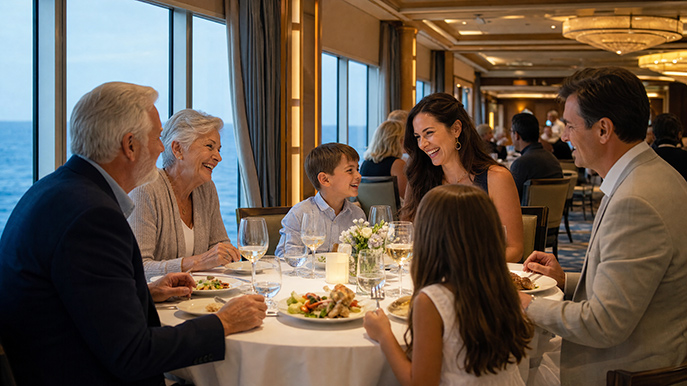
“With big groups, a cruise might be the way to go,” says McLaughlin. “There’s something for everyone. You don’t have to pack and unpack, which some people don’t like doing, especially when they’re also packing their children’s suitcases.”
Cruises offer activities, dining and amenities for different ages without hotel changes or complicated transportation. Resorts with several restaurants and a slate of on-site programming can provide similar flexibility for families.
Help When Things Go Sideways
Even a carefully planned vacation can unravel. Flights are delayed. Bad weather hits. Lax recalls one trip that required a last-minute pivot after a resort in Jamaica closed following a hurricane. “We had already found the perfect hotel. We had our flights,” she says. “I didn’t want to deal with having to change everything. [Ellis] was able to find us a place, get our money back and rebook our flights. She basically dealt with everything. We didn’t feel any of the stress.”
It’s during these times that the value of using a travel advisor often becomes most clear.
“Having that peace of mind and knowing that you have that support, it makes travel less stressful than when you’re doing it on your own,” says Lax. “It really allows you to just relax on the trip.”
Contact us to start planning your next adventure!
Plan Your Trip
Harper’s Station
11309 Montgomery Road
Suite B
Cincinnati, Ohio 45249
513-247-1100